Dual-Stage Air Purifier Guide: HEPA + Carbon Benefits
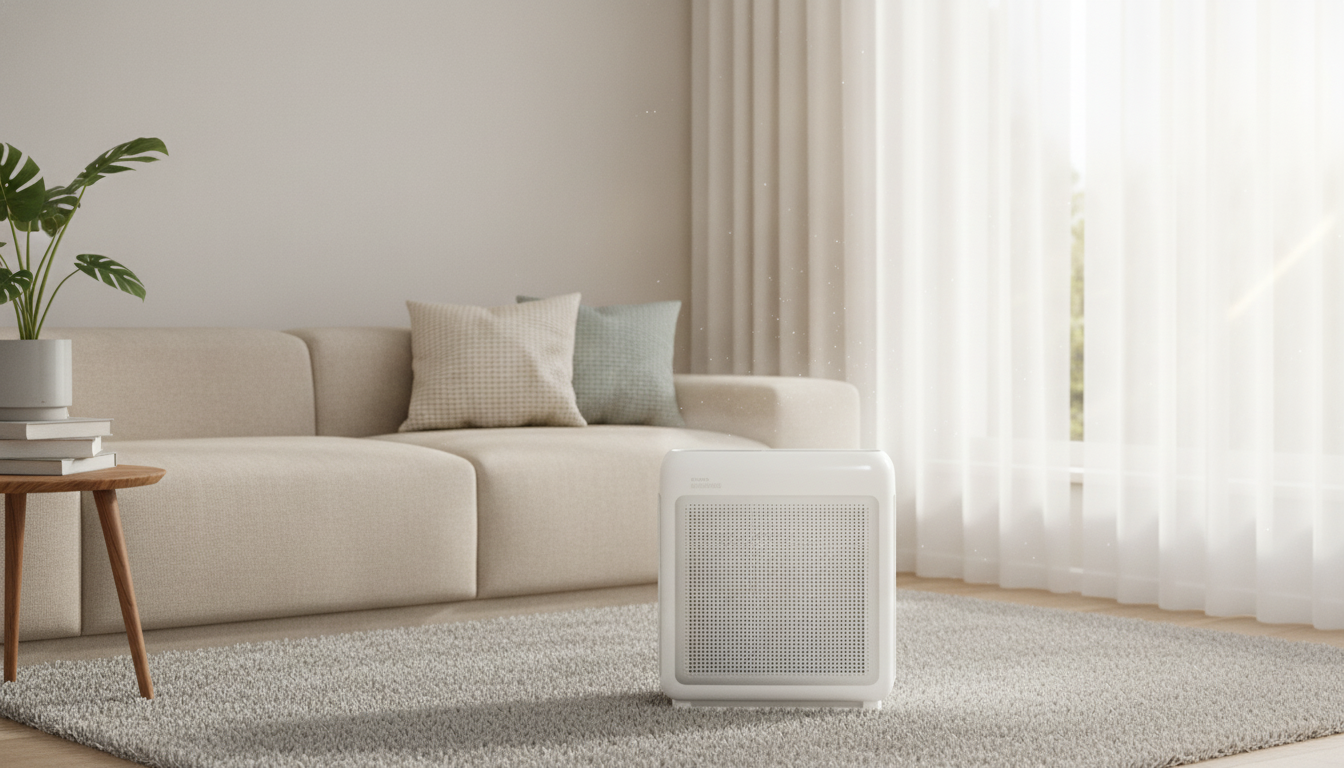
Why dual-stage filtration matters for everyday indoor air
Indoor air can carry fine particles, allergens, and persistent odors from cooking, pets, and smoke. An air purifier that pairs a high-efficiency particle filter (HEPA) with activated carbon is built to tackle both the visible side of air quality (dusty haze, allergens) and the invisible side (odors and certain gases). The result is a more comfortable space—especially when you combine filtration with smart habits like ventilating during heavy cooking and keeping dust under control.
Dual-stage purifiers are especially useful in homes where “the air looks dusty” and “the room smells stale” can happen at the same time. Instead of choosing between particle capture and odor reduction, you get a system designed to address both.
What HEPA and activated carbon each handle
HEPA filtration is engineered to trap tiny airborne particles that commonly trigger allergies or make a room feel dusty. Activated carbon works differently: it adsorbs odor-causing gases and can reduce certain household VOCs (results vary based on how much carbon is used and how long air stays in contact with it). Used together, these stages cover a wider range of common indoor air complaints than either one alone.
| Air issue | HEPA filter | Activated carbon filter |
|---|---|---|
| Dust and lint | Captures | Not primary |
| Pollen and many allergens | Captures | Not primary |
| Mold spores | Captures | Not primary |
| Pet odors | Limited | Reduces odors |
| Cooking odors | No | Reduces odors |
| Smoke odor (lingering smell) | Limited (particles only) | Reduces odors |
| Some VOCs | No | Can reduce (varies by carbon amount and contact time) |
For best results, filtration should be paired with basic source control—like running an exhaust fan while cooking, avoiding indoor smoking, and keeping up with routine cleaning. For practical background on air cleaners and what they can (and can’t) do, the EPA’s guidance is a helpful reference: EPA — Guide to air cleaners in the home.
Where an advanced purifier makes the biggest difference
Bedrooms
Bedrooms are a high-impact place to use a dual-stage purifier because people spend long, uninterrupted hours there. Reducing airborne dust, pollen, and pet dander overnight can make sleep feel more comfortable for sensitive households, especially during seasonal allergy swings.
Living rooms and shared spaces
In living rooms, odors and particles often come from multiple sources—candles, cooking that drifts from the kitchen, fireplaces, or frequent foot traffic. A purifier can help keep the general “background” air cleaner between deep-clean days.
Apartments and condos
Multi-unit living can introduce challenges that aren’t entirely under your control, such as hallway odors, neighbor cooking smells, or outdoor pollutants that seep in. A purifier in the main living space or bedroom can provide a more consistent indoor baseline.
Homes with pets
Pet ownership often means a mix of airborne dander and lingering odor compounds that settle into soft furnishings. HEPA helps with the particles; carbon helps with the smell—provided filters are replaced on a realistic schedule.
Placement and operation for better real-world performance
Even a strong purifier underperforms if it can’t “breathe.” Place the unit where air can circulate freely, keeping the intake and outlet away from curtains, couches, and tight corners. In bedrooms, positioning it a few feet from the bed often balances comfort and coverage without blasting airflow directly at sleepers.
After odor-heavy events—like searing food, using strong cleaners, or brief smoke exposure—run the purifier on a higher setting for a while, then step down to a quieter maintenance speed. If the goal is to improve air in adjacent spaces, leaving interior doors open can help, but a single unit is still most effective in the room where it’s placed.
Ventilation remains important. Air cleaning reduces indoor pollutant levels, but fresh air exchange helps dilute what filtration can’t immediately capture. For practical ventilation tips, see: CDC — Ventilation in buildings.
Filter care, replacement rhythm, and cost of ownership
To reduce the burden on filters, pair your purifier with routine cleaning: vacuum high-traffic areas, wipe hard surfaces, and wash soft textiles regularly. If you rotate seasonal bedding or spare blankets, sealing them while stored can also help keep dust and odors from building up over time. A simple option for organizing and protecting folded textiles is the 2pcs Set Reusable Baby Blanket Storage Bag.
Safety notes and common misconceptions
It’s also worth avoiding ozone-generating devices for routine indoor use; for most homes, mechanical filtration is the safer, more practical choice for continuous operation. Finally, remember that carbon performance varies—more carbon, better contact time, and appropriate airflow are what make odor and gas reduction more noticeable. For additional technical perspective on filtration and air cleaning, ASHRAE’s guidance can be useful: ASHRAE — Filtration and air cleaning guidance.
Product spotlight: Advanced HEPA & Activated-Carbon Air Purifier
The Advanced HEPA & Activated-Carbon Air Purifier combines particle filtration with odor and gas reduction in one unit, making it a practical choice for day-to-day comfort in lived-in spaces. It’s especially helpful for households balancing seasonal allergens, pet dander, and recurring kitchen or smoke odors.
FAQ
Does activated carbon remove smoke from the air?
Activated carbon can help reduce smoke-related odors and some gaseous byproducts, while a HEPA filter captures smoke particles. Results depend on the amount of carbon, airflow rate, and whether smoke exposure is ongoing.
How long should an air purifier run each day?
For consistent results, many households run an air purifier for extended hours or continuously. A common approach is using higher speed after odor events, then switching to a lower setting for quieter, steady maintenance.
When should HEPA and carbon filters be replaced?
Replacement timing varies by dust levels, pets, smoke exposure, and daily runtime. Follow the manufacturer’s interval, and adjust sooner if airflow drops noticeably or odors return more quickly than they used to.












Leave a comment