5-Gallon Brewing Kettle: Thermometer + Ball Valve Guide
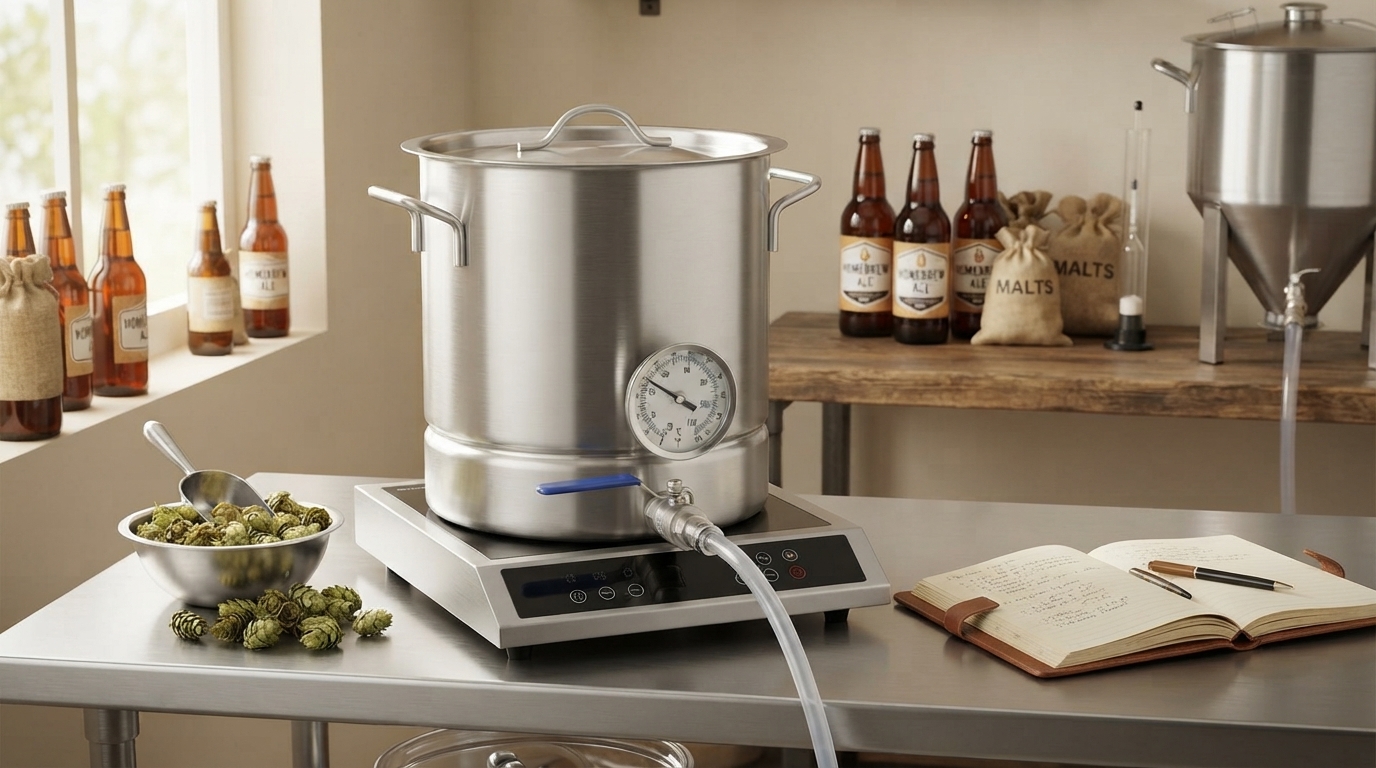
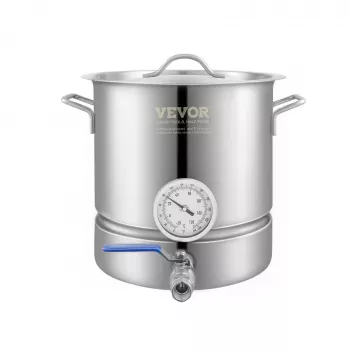
5 Gallon Stainless Steel Brewing Kettle with Thermometer & Ball Valve
A 5-gallon stainless steel kettle with an integrated thermometer and ball valve helps streamline brew day by improving temperature control and making transfers cleaner and faster. For small-batch beer, extract brewing, and a wide range of hot-water and infusion tasks, this setup reduces guesswork and cuts down on awkward lifting when it’s time to drain.
If you’re looking for an all-in-one kettle that supports repeatable results while staying simple to use, the 5 Gallon Stainless Steel Brewing Kettle with Thermometer & Ball Valve is a practical, space-friendly option for home setups.
What This Kettle Adds to Brew Day
- Built-in thermometer: Supports repeatable temperature checks during heating, steeping, and chilling steps, without juggling a separate probe.
- Ball valve draining: Enables controlled transfers to a fermenter or bottling bucket with less lifting, fewer spills, and better flow control.
- Stainless steel construction: Handles frequent heating cycles, resists staining, and is less likely to hold onto odors compared to some other materials.
- 5-gallon capacity: Fits small-batch brewing and many extract and partial-mash processes, especially when you plan headspace carefully.
Core Features That Matter Most
- Thermometer placement: Look for a location that reads liquid temperature, not just steam near the surface. This is especially important during warm-up and chilling.
- Ball valve operation: A smooth quarter-turn valve makes it easier to slow the flow for careful transfers, or speed it up for filling and cleaning.
- Kettle wall and base: Sturdier construction supports more even heating and helps reduce hot spots during vigorous boils.
- Lid and handles: A fitted lid helps with heat retention (and can help during heat-up), while sturdy handles reduce risk when repositioning the kettle.
- Fittings and seals: Tight connections help prevent slow drips and also simplify cleanup by keeping wort from sneaking into gaps.
Best Uses: Brewing, Boiling, and More
Beer brewing
This size is well-suited to extract batches and smaller all-grain batches. If you’re pushing close to full capacity, plan carefully for foam and evaporation so you don’t lose volume or create a boil-over mess.
Tea, coffee, and botanical infusions
The dial thermometer is useful for staying in target steep ranges (for example, keeping water hot but not aggressively boiling when you want a cleaner extraction).
Sanitizing and hot-water tasks
A valve makes it easier to portion hot water into smaller containers without tipping a heavy pot. That’s helpful for dissolving brewing sugars, pre-warming vessels, or rinsing equipment.
Wort chilling workflows
Paired with an immersion chiller, the kettle thermometer gives a quick “at-a-glance” read on cooling progress. For boil fundamentals and why steady boiling matters, reference the Homebrewers Association brewing resources: https://www.homebrewersassociation.org/how-to-brew/.
Capacity, Headspace, and Batch Planning
A 5-gallon kettle is compact and efficient, but planning headspace is the difference between a smooth boil and a sticky cleanup. During hot break, foam can rise quickly—especially with higher-protein worts or aggressive heat input—so leaving extra room at the top remains important even if a lid is available.
- Consider smaller finished volumes: Many brewers use a 5-gallon kettle for 2.5–4 gallon finished batches, or for split boils that are later topped up in the fermenter.
- Manage boil vigor: If you’re boiling near capacity, watch the first 10–15 minutes closely, reduce heat as the foam builds, and only increase once the hot break settles.
- Plan valve submersion: During transfer, keep the valve outlet and pickup area submerged to reduce splashing and maintain a steady flow.
Specifications at a Glance
When comparing kettles with similar accessories, focus on the details that affect day-to-day use: materials, fitting quality, valve control, and how easily you can read and trust temperature.
| Item | What to Look For | Why It Helps |
|---|---|---|
| Capacity | 5-gallon kettle volume and usable headspace | Reduces boil-over risk and supports planned batch size |
| Material | Food-grade stainless steel | Durable, easy to clean, resists corrosion |
| Thermometer | Easy-to-read dial and stable probe placement | More consistent temperature control |
| Ball Valve | Smooth quarter-turn valve and tight seals | Cleaner transfers and better flow control |
| Handles/Lid | Sturdy handles and fitted lid | Safer handling and flexible heating/holding steps |
How to Set Up the Thermometer and Valve
Cleaning, Care, and Storage
Stainless steel is forgiving, but a quick routine prevents stubborn residue and keeps fittings working smoothly. For general stainless care guidance, see NSF’s stainless steel cleaning overview: https://www.nsf.org/consumer-resources/articles/stainless-steel-cleaning.
Common Issues and Quick Fixes
Related In-Stock Picks
- 5 Gallon Stainless Steel Brewing Kettle with Thermometer & Ball Valve
- 55PCS Interlocking Drainage Floor Tiles (useful for wet areas where you rinse equipment)
- Cactus Tall Cat Tree for Large Cats (helps keep curious pets occupied away from gear)
FAQ
Is a 5-gallon kettle large enough for a full 5-gallon beer batch?
It can work, but headspace is tight for a full-volume boil because foam and hot break can rise quickly. Many brewers prefer a larger kettle for 5-gallon finished batches, while a 5-gallon kettle shines for smaller batches or split boils topped up in the fermenter.
How accurate are built-in kettle thermometers?
Dial thermometers are often close enough for brewing, but readings can vary based on probe placement and calibration. Checking in ice water and near-boiling water helps you understand any consistent offset so you can adjust your process accordingly.
How should the ball valve be cleaned after brewing?
Flush it immediately with warm water to remove sticky wort, then wash with a brewery-safe cleaner as part of your normal cleanup. If the valve can be disassembled, doing so occasionally helps remove residue trapped inside and prevents off-odors.















Leave a comment