Strength in Words: Encouragement for Men’s Confidence

Strength in Words: Encouragement That Builds Confidence and Supports Men’s Mental Health
Steady encouragement can be a practical tool for men navigating stress, self-doubt, burnout, or major life transitions. The right words can help name what’s happening, reduce isolation, and create small, repeatable habits that support confidence and emotional resilience—without forcing a “tough it out” mindset. Encouragement isn’t about pretending everything is fine; it’s about giving your mind a steadier script to follow when pressure rises.
Why encouragement matters for men
Encouragement helps counter negative self-talk by offering a healthier, more balanced inner script. When the day gets loud—deadlines, bills, family needs, health concerns—many men default to a harsh internal voice that calls every mistake “proof” they’re failing. Supportive language doesn’t erase accountability; it changes the tone from attack to coaching.
Men are often socialized to minimize emotions, so stress can show up as irritability, shutdown, overworking, or numbing out. Calm, supportive words normalize the experience (“This is pressure, not weakness”) and make coping strategies feel more accessible. Over time, consistent affirming messages can reinforce identity-based goals—integrity, reliability, courage—rather than perfection.
Words work best when paired with action: a short phrase followed by one doable step. That combination reduces overwhelm, builds momentum, and creates a track record of follow-through—one of the fastest ways to grow confidence.
What “empowering” encouragement looks like
Empowering encouragement is specific and grounded. Instead of vague hype, it focuses on effort, values, and next steps: what you can do today, not what you “should” magically become by tomorrow.
- Specific and grounded: “You kept your word and showed up” lands better than “You’ve got this” when someone feels shaky.
- Compassionate but accountable: It validates difficulty while still pointing toward agency: “This is heavy. What’s the next right step you can take?”
- Respectful tone: No shaming, sarcasm, or comparisons that trigger defensiveness.
- Permission-giving: It makes it acceptable to rest, ask for help, and set boundaries—without framing those choices as failure.
When encouragement is respectful and practical, it becomes usable under stress—like a handrail, not a speech.
How to use encouragement as a daily confidence practice
Morning reset (2 minutes)
Choose one statement that matches the day’s challenge and repeat it while planning one small action. Example: “Do the next manageable thing.” Then decide what that is—one email, one call, one workout warm-up.
Midday check-in
Notice stress signals (tight jaw, shallow breathing, irritability) and use a short phrase to interrupt spirals: “Pause. Breathe. Prioritize.” Pair it with a single reset action: drink water, step outside for two minutes, or write the next task on a sticky note.
Evening reflection
Write one win, one lesson, and one kind sentence about the day—no negotiating with the inner critic. This trains your brain to store evidence of progress, which matters when confidence is low.
In tough moments: “name it, breathe, choose”
Name the emotion (“I’m anxious” or “I’m disappointed”), take five slow breaths, then choose the next right step. The goal isn’t to feel great instantly; it’s to keep your choices aligned with your values.
For more on how stress affects the body and why small resets help, see the American Psychological Association’s overview of stress effects.
Encouragement for common situations men face
Work pressure
Relationships and fatherhood
Fitness and health changes
Loss, loneliness, and transitions
Mental health struggles
When symptoms show up—low mood, anxiety, numbness—reminders can keep identity separate from the struggle: “Symptoms aren’t character flaws.” “Getting help is a strength move.” For reputable background on men and mental health, visit the National Institute of Mental Health and the CDC’s mental health resources.
A simple way to share encouragement with him (without sounding scripted)
Quick encouragement guide by situation
| Situation | What to say | Best follow-up action |
|---|---|---|
| Overwhelmed at work | “Handle one thing at a time. Progress is still progress.” | Pick the next single task; set a 25-minute focus block |
| Low confidence | “You’re allowed to be learning. Keep showing up.” | List one skill to practice today; track one small win |
| After a setback | “This is hard, and it doesn’t define you.” | Name the lesson; choose one repair step |
| Relationship tension | “You can be honest and kind at the same time.” | Use a calm check-in; apologize for the impact, not the intent |
| Anxiety or stress | “Breathe first. Then decide.” | 5 slow breaths; drink water; take a short walk |
Featured resources you can gift or use daily
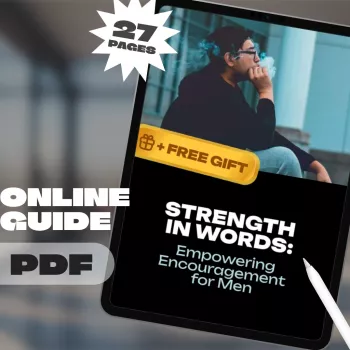
- Strength in Words: Empowering Encouragement for Men (eBook) — a focused collection designed for quick daily reading, journaling prompts, or sharing a message with a partner, friend, brother, or teammate.
- Calvin Klein Men’s Leather Wallet — a classic, useful gift that pairs well with a supportive note and a simple reminder to take things one step at a time.
- 2pcs Set Reusable Baby Blanket Storage Bag — a practical add-on for new dads or growing families, especially during busy seasons where small organization wins reduce daily stress.
When encouragement isn’t enough
FAQ
What are good words of encouragement for men who feel stuck?
Use grounded reassurance plus a next step: acknowledge that feeling stuck is real, remind him the moment isn’t permanent, and suggest one small action (a short walk, one call, or completing a single task). Keep it calm and specific so it feels doable.
How can encouragement improve confidence over time?
Repeated supportive statements reduce negative self-talk and reinforce effort and values, especially when paired with small daily actions. Those micro-actions build competence and self-trust, which is what confidence is made of.
Is an encouragement eBook a good gift for him?
Yes—especially for men who prefer practical, bite-sized reading they can use privately. It’s a helpful gift for a new job, burnout season, a breakup, fatherhood, or any transition where consistent reassurance and simple next steps matter.














Leave a comment