Daily Calm Checklist: Quick Resets & Mindful Anchors
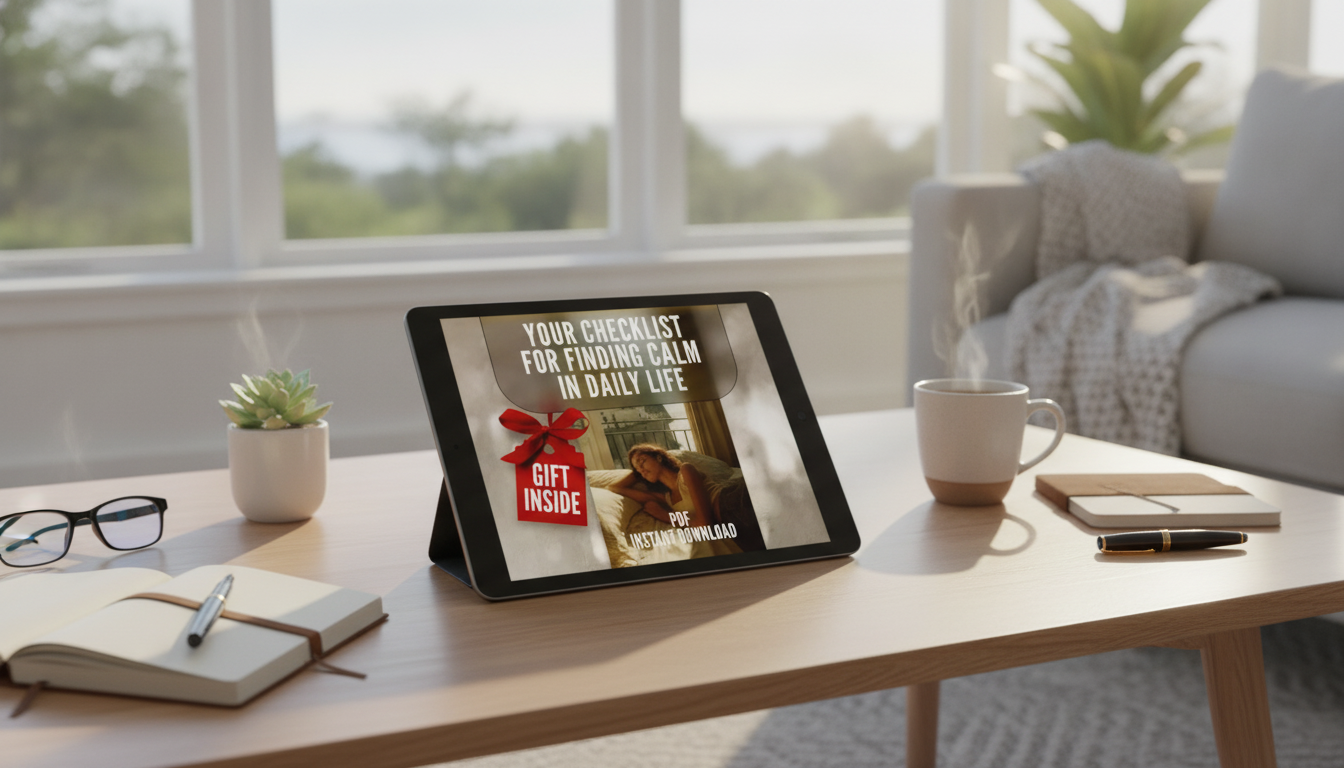
Your Checklist for Finding Calm in Daily Life
Daily stress often shows up as racing thoughts, tension, irritability, or a constant feeling of being “on.” A simple checklist can turn vague self-care intentions into small, repeatable actions that steady the body and mind. This guide shares practical ways to calm yourself down in the moment and build a calmer routine—plus an instant digital checklist you can save, print, and use anytime.
What “calm” looks like in real life
Calm isn’t the absence of problems; it’s a steadier nervous system response while life continues. When you’re regulated, challenges still exist, but your body is less likely to act like every email, noise, or to-do item is an emergency.
Common signs of stress overload include shallow breathing, jaw or shoulder tension, trouble focusing, sleep disruption, doom-scrolling, and quick frustration. When those signals stack up, choosing what to do next can feel like another task—so nothing happens.
A checklist helps by reducing decision fatigue. Instead of searching for the “perfect” technique, you pick one proven option and start. Aim for “micro-calm” moments (30–120 seconds) repeated throughout the day; consistency often matters more than duration.
For more on how stress affects the mind and body, see the American Psychological Association’s overview of stress.
A quick reset: calm in 60–180 seconds
When stress is spiking, start with what the body can feel right now. These options are designed to be doable at your desk, in the car (parked), or between responsibilities.
1) Breathing reset
Inhale through your nose and exhale longer than you inhale (for example, 4 seconds in and 6–8 seconds out) for 5–10 cycles. Longer exhales can help dial down the intensity of the stress response.
2) Grounding with senses
Name 5 things you see, 4 things you feel, 3 things you hear, 2 things you smell, and 1 thing you taste. This interrupts spiraling thoughts by anchoring attention in the present.
3) Muscle release
Unclench your jaw, drop your shoulders, and soften your hands. Then do a gentle shoulder roll or neck stretch without forcing range. Often the fastest “calm” starts with letting go of unconscious bracing.
4) Temperature shift
Cool water on wrists or face, holding a cold drink, or stepping outside for a brief temperature change can help reduce the intensity of activation.
5) One-sentence reframe
Swap “I can’t handle this” for “This is hard, and one small step is enough right now.” The goal isn’t forced positivity—it’s returning to something workable.
Use the checklist: pick the right tool for the moment
Not every calming technique fits every situation. A useful rule: physical agitation often responds best to body-based steps; mental overwhelm often responds to structure and clarity.
If stress is high, choose a “body first” option (breath, grounding, movement) before trying to problem-solve. If stress is moderate, try a “clarity” option (a quick brain dump, a 3-item priority list, or a boundary script). If stress is low but persistent, focus on “maintenance” (hydration, sunlight, a short walk, or a calming ritual).
Make it easy to use: keep the checklist visible on a phone lock screen, at your desk, on the fridge, or printed in a bag.
| When it feels like… | Try this first | Why it helps |
|---|---|---|
| Racing thoughts | 60-second breathing + brain dump | Slows arousal; offloads mental clutter |
| Tight chest/tense body | Longer exhales + shoulder/hand release | Signals safety; reduces muscle guarding |
| Irritable and snappy | Pause + water + step away for 2 minutes | Creates space before reacting |
| Overwhelmed by tasks | Pick 1 “must-do” + 1 “nice-to-do” | Restores control and momentum |
| Low mood + fatigue | 5–10 minutes of light movement or sunlight | Supports energy and regulation |
Build a calmer day with small anchors
Morning anchor (2–5 minutes)
Midday anchor
Evening anchor
Track gently: check off what happened rather than judging what didn’t. If you want evidence-based stress coping ideas, the CDC’s coping with stress guidance is a solid reference point.
Mindful living without perfection
Use “single-task” minutes
Create an environment cue
Boundary micro-scripts
If you’d like a straightforward intro to mindfulness, the NHS mindfulness overview explains how small practices add up.
Instant digital checklist: keep calm tools within reach
If you do better with clear prompts you can follow under pressure, Your Checklist For Finding Calm In Daily Life – Instant Digital Download for Ways to Calm Yourself Down, Stress Relief, and Mindful Living is designed to be simple, quick to use, and easy to revisit. It’s an instant digital download, priced at $3.99.
Calm can also come from reducing little frictions that add noise to your day. If organization helps you feel more settled, consider a small everyday-carry upgrade like the Calvin Klein Men’s Leather Wallet (keeping cards and cash easy to find) or home-and-on-the-go storage like the 2pcs Set Reusable Baby Blanket Storage Bag (helpful for quick decluttering and grab-and-go routines).
FAQ
How quickly can calming techniques work?
Some body-based techniques (like longer exhales, grounding, or muscle release) can reduce intensity within 1–3 minutes. Deeper, more reliable calm usually comes from repeating small practices daily so your baseline stress response gradually steadies.
What if nothing helps in the moment?
Start with the smallest step you can do—sip water, step outside, or unclench your jaw—then repeat it once or twice. If distress is severe, persistent, or includes panic symptoms, consider reaching out to a licensed professional or local support services.
Is a checklist still useful if mindfulness is hard?
Yes—checklists reduce decision fatigue and give clear prompts when your brain feels overloaded. Mindfulness can be as simple as noticing one sensation and returning attention to one breath or one task.














Leave a comment