30,000 RPM Cordless Nail Drill: Safe Speed Guide
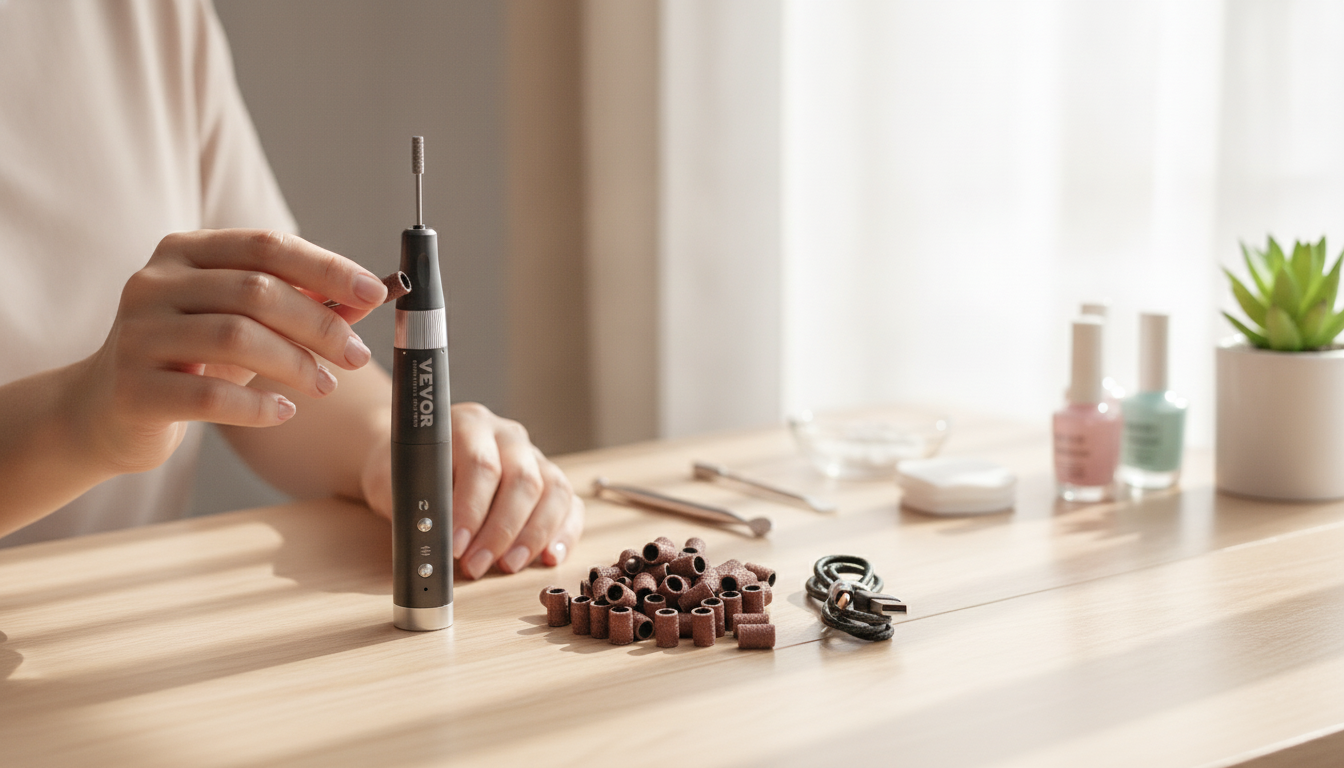
Cordless Electric Nail Drill 30,000 RPM with Variable Speed for Manicure and Pedicure
A cordless nail drill with adjustable RPM can speed up prep, shaping, and removal while keeping control for natural nails and tougher enhancements. A 30,000 RPM ceiling doesn’t mean you should run at max speed all the time—it means you have headroom for efficient bulk reduction when technique and bit choice call for it. Below is a practical breakdown of what a cordless, variable-speed drill helps with, how to choose safer speeds, and how to keep performance consistent at home or on the go.
What a 30,000 RPM cordless nail drill helps with
A higher top speed is most useful when working on thicker materials and when you want the bit to cut smoothly with lighter pressure. In real use, a 30,000 RPM cordless nail drill can support:
- Refining shape on enhancements (gel, acrylic) and smoothing product surface
- Reducing bulk during removal when paired with the right bit and light pressure
- Cleaning up the cuticle area with low-speed bits designed for detail work
- Pedicure callus smoothing with appropriate sanding bands or pedicure bits
- Cordless convenience for travel, small stations, and quick touch-ups
Variable speed: control first, power second
Variable speed is where a cordless drill becomes genuinely versatile. Instead of forcing one “fast” setting into every step, you can match RPM to the sensitivity of the area and the hardness of the product.
- Low RPM supports precision around the cuticle and natural nail to reduce accidental thinning.
- Mid RPM is useful for smoothing builder gel or refining overlays without excessive heat.
- High RPM is best reserved for bulk reduction on enhancements with a steady hand and correct bit.
- A stable speed dial/controls matter as much as the top RPM for consistent results.
- Heat buildup is typically caused by too much pressure, staying in one spot, or using a dull bit—not only by RPM.
If your drill has forward/reverse, choose the direction that complements your filing angle and dominant hand, and keep your strokes controlled. Smooth, repeatable motion usually produces a cleaner surface than trying to “erase” material in one spot.
Speed guide (RPM ranges) for manicure and pedicure tasks
Start lower than expected and increase gradually until the bit cuts cleanly without pushing. Use brief passes and keep the bit moving to limit heat and friction, and always match the bit type (ceramic/carbide/diamond/sanding band) to the material you’re working on.
| Task | Typical RPM range | Notes for safer results |
|---|---|---|
| Cuticle detailing (with appropriate cuticle/diamond bit) | 3,000–8,000 | Light touch; avoid lingering on the natural nail plate |
| Natural nail surface refining (minimal) | 5,000–10,000 | Use fine grit; short passes only |
| Gel polish removal (file-down method) | 10,000–18,000 | Use a smooth/controlled stroke; stop before the base layer |
| Builder gel / hard gel shaping | 15,000–25,000 | Keep moving; use the correct bit for gel to reduce chatter |
| Acrylic bulk reduction | 20,000–30,000 | Best for experienced use; control pressure to avoid heat spikes |
| Callus smoothing (pedicure bits) | 8,000–15,000 | Do not over-thin skin; finish with lower speed and finer grit |
Cordless operation: battery, charging, and portability
Going cordless removes cable drag, which can make hand positioning easier during detailed work—especially around sidewalls and the cuticle line. For smoother sessions:
- Plan sessions around charge level for uninterrupted shaping or removal.
- Allow the handpiece to cool between longer removal steps if it begins to warm.
- Store the drill and bits in a dry case to protect electronics and prevent bit corrosion.
Bit compatibility and what to keep in a basic kit
Comfort factors: vibration, noise, and hand fatigue
Safety and hygiene essentials for drill use
For additional workplace-style guidance on ventilation, dust, and general hygiene, see resources from CDC/NIOSH and OSHA.
How to get smooth results with less heat
Care and maintenance for reliable performance
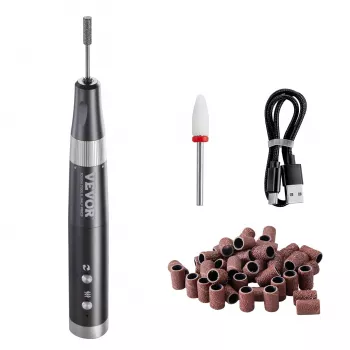
Product spotlight: Cordless Electric Nail Drill 30,000 RPM with Variable Speed
If you want a cordless drill that can handle both careful detailing and faster enhancement work, the Cordless Electric Nail Drill 30,000 RPM with Variable Speed for Manicure Pedicure offers adjustable speed up to 30,000 RPM for flexible control. Pair the right RPM with the right bit, keep pressure light, and you’ll get smoother shaping, cleaner refinement, and more predictable removal steps.
For organization and on-the-go storage, a compact case setup helps keep bits clean and protected between sessions. You may also like the 2pcs Set Reusable Baby Blanket Storage Bag as a simple way to separate tools and accessories during travel.
If you set up a small home station, adding an audio option can make longer sessions feel easier. Consider the 20W Portable Bluetooth Speaker for background sound while you work.
FAQ
Is 30,000 RPM too fast for natural nails?
High RPM is usually unnecessary for natural nails. Use lower speeds with a fine grit, light pressure, and short passes, and reserve higher RPM mainly for bulk reduction on enhancements when you have the right bit and steady control.
What RPM should be used to remove gel polish safely?
A mid-range RPM often works well with controlled strokes to file down the color and top layers. Stop before the base layer, reduce pressure as you get closer, and switch to a finer grit to limit heat and over-filing.
Why does a nail drill feel hot or sting during use?
Heat or stinging is commonly caused by too much pressure, staying in one spot, using a dull bit, or using an abrasive that’s too coarse for that step. Lower the RPM, keep the bit moving, lighten your touch, and swap to a fresh or finer abrasive.













Leave a comment