AI Travel Safety Checklist: Verify News & Travel Confident
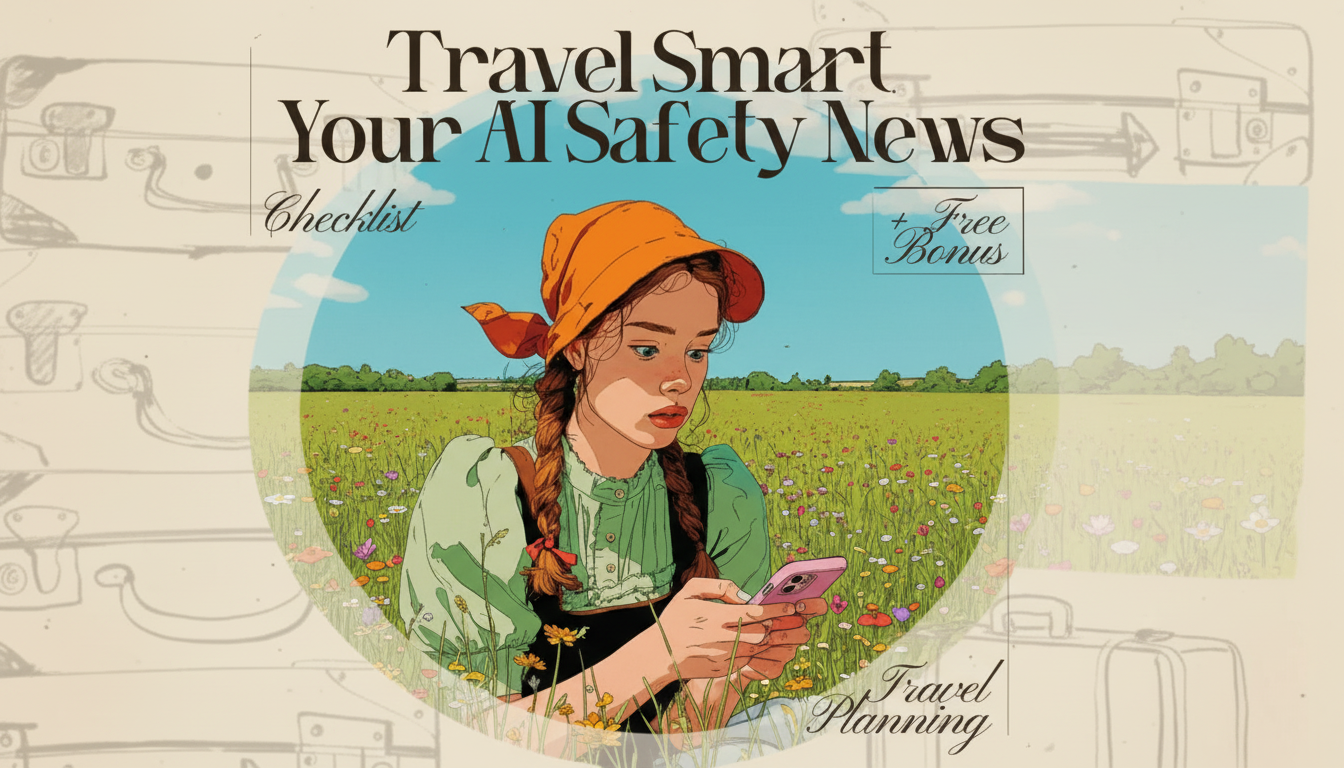
Travel Smart: Your AI Safety News Checklist for Confident, Secure Trips
Staying safe while traveling now means more than packing well—it means tracking fast-changing local conditions, knowing what to verify, and acting early. This digital checklist is built to help travelers quickly review safety updates, confirm what’s credible, and turn information into practical decisions before and during a trip.
What this checklist is (and why it’s different)
The Travel Smart: Your AI Safety News Checklist (digital download) is a step-by-step system for monitoring and evaluating breaking updates that can affect a destination—weather shifts, transit disruptions, health notices, local incidents, or policy changes.
- A digital, repeatable checklist designed around real-time monitoring, not one-time research.
- Built around decision points: what to check, how often, what counts as a real signal, and what to do next.
- Reduces last-minute scrambling by turning “I should look into that” into a simple routine.
- Works for weekend trips, long itineraries, multi-country routes, solo travel, families, and business trips.
Instead of chasing every headline, the goal is to create a short, consistent “safety scan” that keeps you informed without keeping you stressed.
Who benefits most
- Frequent travelers who want a consistent pre-trip and daily check without spending hours scrolling.
- First-time international travelers who need clarity on what to monitor and what matters most.
- Road-trippers and adventure travelers who may be impacted by closures, wildfire smoke, storms, or remote-area limitations.
- Peak-season travelers navigating crowds, big events, and higher odds of disruptions.
How to use the checklist before booking and before departure
Good safety decisions start with a “baseline,” then move into focused monitoring. The checklist keeps that flow simple: establish what’s normal for the destination, identify what could derail your trip, and verify changes before you act.
- Start with a destination baseline: current advisories, typical local risks, and any areas to avoid.
- Identify trip-critical dependencies: flights, transit strikes, border rules, seasonal weather patterns, and major events.
- Use a two-source verification habit: confirm key updates with at least two authoritative sources before changing plans.
- Create a contingency plan: alternate neighborhoods, backup transport, and a plan for delays or reroutes.
Safety checks by timeline
| When | What to check | What to decide |
|---|---|---|
| 2–4 weeks out | Advisories, seasonal conditions, major events, entry rules | Go/no-go destination choice; adjust itinerary |
| 7 days out | Weather trends, transit disruptions, local alerts | Rebook timing; select safer lodging area |
| 48 hours out | Flight status, airport/rail advisories, local news spikes | Pack/route adjustments; share updated plan |
| Travel day | Live transport alerts, weather warnings, local safety notices | Delay/alternate route; arrival timing |
| Daily during trip | Neighborhood conditions, protests/closures, health alerts | Where/when to go; avoid hotspots |
Using AI and news safely: credibility, context, and calm decisions
AI summaries and fast news can be helpful for catching signals early—but only if you treat them as starting points. The checklist emphasizes verification and context, so a scary headline doesn’t turn into an impulsive decision.
- Treat fast updates as signals, not conclusions: verify the source, location, and timestamp before reacting.
- Watch for misinformation patterns: recycled images, vague locations, and headlines missing dates or specific neighborhoods.
- Prioritize primary sources for critical calls: government advisories, meteorological agencies, and official transit operators.
- Keep a calm protocol: decide what’s urgent (immediate action) vs. what can be rechecked in a few hours.
Authoritative sources to keep bookmarked include the U.S. Department of State — Travel Advisories, the UK Foreign, Commonwealth & Development Office — Foreign travel advice, and the World Health Organization — Travel advice.
What’s inside the digital download
This download is designed to be used, not admired. It’s structured so you can move from “What’s happening?” to “What do I do next?” without building a new system every time you travel.
If you want a ready-to-use framework you can reuse for every itinerary, start with the Travel Smart: Your AI Safety News Checklist (digital download).
Practical add-ons that pair well with a safety-first travel routine
- Money and ID organization: keep essential cards and emergency cash separate from daily spending. A slim, durable option like the Calvin Klein Men’s Leather Wallet can help keep key items organized and quick to access.
- Digital backups: store copies of your passport/ID, insurance, and confirmations in a secure, encrypted location, with offline access when possible.
- Simple group routines: one daily check-in time, a shared itinerary, and clear meetup points if phones fail or crowds separate you.
- Pack discipline: minimize what you carry each day, and lean on tap-to-pay where available to reduce cash handling.
For family travel or longer stays, keeping smaller items contained can also make departures quicker and reduce the “where did we put that?” effect. The 2pcs Set Reusable Baby Blanket Storage Bag can be repurposed for lightweight organization (spare layers, snacks, or backup essentials) in a suitcase or trunk.
Printing, saving, and using it on the go
FAQ
Is this checklist a replacement for official travel advisories?
No. It’s designed to complement official advisories by organizing what to check, how to verify it, and how to turn updates into actions; for final decisions, rely on government and local authority guidance.
How often should safety updates be checked while traveling?
A practical cadence is once daily (morning or early evening) plus an extra check before any transit day or long excursion. In rapidly changing situations—severe weather, strikes, or major incidents—recheck more frequently and prioritize official alerts.
Does the checklist work for domestic trips as well as international travel?
Yes. Domestic trips use many of the same steps (weather, closures, local advisories, transit status), while international travel adds entry rules and consular considerations; the same verification and contingency approach applies to both.















Leave a comment