Compact Semi‑Auto Espresso Machine: Retro Thermometer, 1.2L
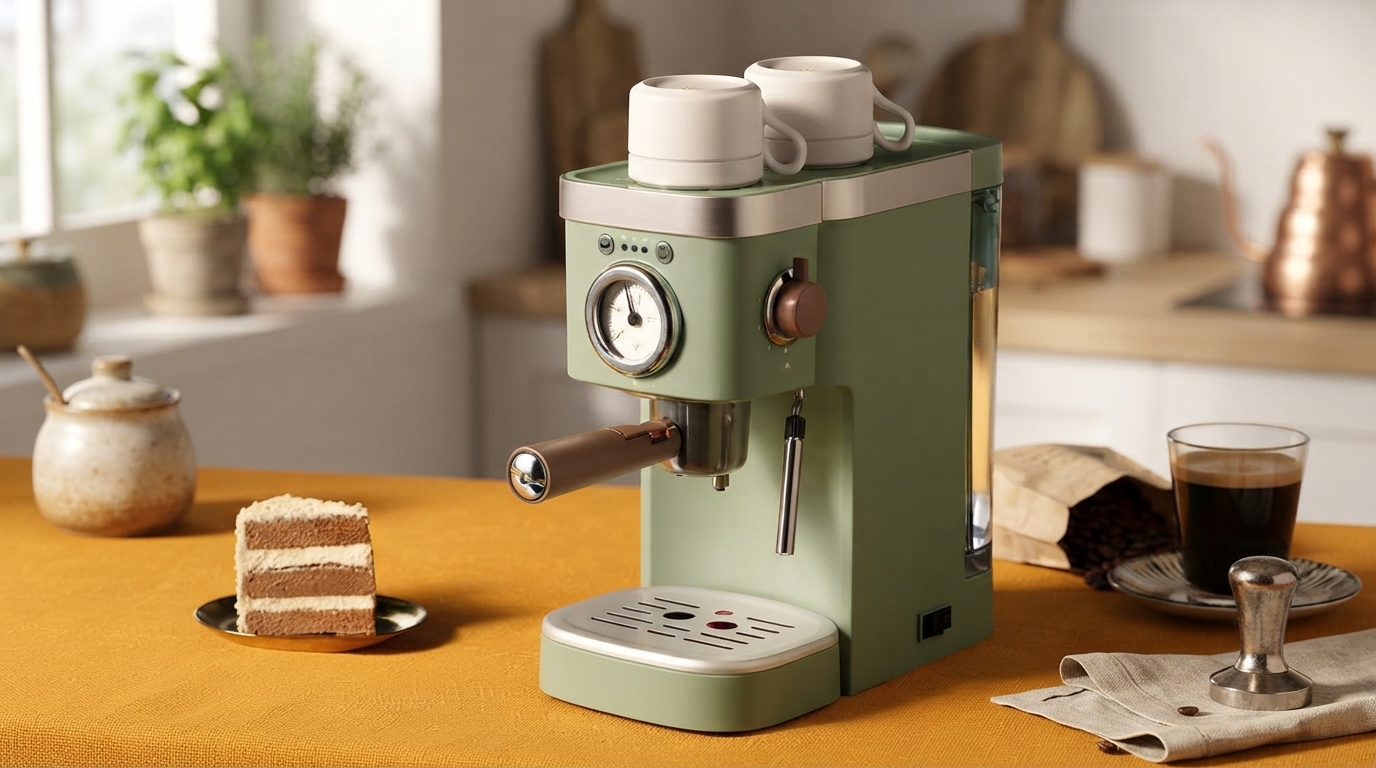
Compact Semi-Automatic Espresso, Sized for Real Life
A compact espresso setup can deliver café-style shots without taking over the counter. This semi-automatic espresso machine pairs a space-saving footprint with a retro-style thermometer and a 1.2L water tank, aiming to make daily espresso and milk drinks more repeatable, easier to monitor, and simpler to fit into small kitchens, offices, or apartments. If the goal is to keep the hands-on craft of espresso while trimming the space and fuss, this style of machine hits a practical middle ground.
If you’re shopping for a compact semi-auto option that still looks like a “real” espresso station, start with the Compact Semi-Automatic Espresso Machine with Retro Thermometer – 1.2L Tank and build your routine around consistent warm-up, dosing, and quick cleanup.
What Makes This Machine Different
- Compact body, classic workflow: It’s designed for smaller countertops while still supporting the familiar semi-automatic rhythm—dose, tamp, brew—without feeling toy-like or cramped.
- Retro thermometer-style display: The analog-inspired readout gives an at-a-glance cue during warm-up and brewing, which can help standardize when you pull your first shot and how you pace back-to-back drinks.
- 1.2L water tank: Big enough to reduce constant refills, yet still aligned with a compact footprint that makes sense in tight spaces.
- Semi-automatic control: Keeps the process approachable while leaving room to learn and dial in espresso based on taste—especially if you’re adjusting grind size and shot time over time.
Key Specs at a Glance
The details that tend to matter most day-to-day are the ones that reduce friction: how often you refill, how easily you can repeat your routine, and whether the machine physically fits where you need it.
| Feature | Why it matters | What to look for in daily use |
|---|---|---|
| 1.2L tank | Fewer refills, steadier workflow | Check how easy it is to remove, fill, and reseat without spills |
| Retro thermometer display | Visual feedback for repeatability | Use it to standardize warm-up time and first-shot timing |
| Compact footprint | Better fit for small counters | Confirm clearance for cups, portafilter handling, and any overhead cabinets |
| Semi-automatic control | More control than fully automatic | Practice dose/tamp consistency and adjust grind for taste |
Who It Fits Best
- Small-space espresso drinkers: Ideal for apartments, office break rooms, and kitchen corners where every inch of counter matters.
- “A few drinks a day” households: The tank size is a comfortable middle ground—less refilling than ultra-compact machines, without the bulk of oversized reservoirs.
- Fans of retro styling with function: The thermometer look isn’t just decorative; it can become part of a repeatable warm-up and brewing rhythm.
- Gift buyers: It’s a statement appliance that can actually become part of someone’s daily routine. For a polished add-on gift, pair it with something personal like the Calvin Klein Men’s Leather Wallet.
Countertop Workflow: From Warm-Up to First Sip
1) Warm up with intention
2) Prep: dose, distribute, tamp
3) Brew: watch the flow, stop with a goal
Start extraction and look for a steady, even stream rather than sputtering or immediate blonding. Many home baristas use simple recipe targets (dose, yield, and time) and then adjust grind size to taste; Barista Hustle’s espresso ratio guidance is a helpful reference for building those habits (https://www.baristahustle.com/blog/espresso-recipes/).
4) Milk drinks: clean steam habits = better texture
5) Clean as you go
Using the Thermometer-Style Display for More Consistent Shots
- Set a repeatable preheat baseline: Pull your first shot only after the display reaches the same warm-up point each day. Consistency beats guessing, especially in colder kitchens.
- Stabilize between drinks: After steaming, the machine may need a short recovery before the next espresso. Using the display as a cue helps avoid rushed back-to-back pulls.
- Track patterns when taste changes: If shots swing suddenly sour or bitter, note whether warm-up time, recovery time, or your first-shot timing changed.
- Pair display cues with simple targets: Keep dose and yield steady first, then tighten timing. This approach aligns with common coffee standards and repeatability principles (see SCA resources: https://sca.coffee/research/coffee-standards).
Care and Maintenance for Reliable Performance
- Daily: Rinse the portafilter and basket, wipe the shower area if accessible, and clean the steam wand after every use.
- Weekly: Wash removable parts that collect coffee oils; check for buildup around the group area.
- Descaling: Follow a schedule that matches your water hardness. Mineral scale can reduce heating efficiency and flatten flavor.
- Water choice: Filtered water often helps reduce mineral buildup and improves taste. General water treatment guidance is available from the CDC (https://www.cdc.gov/healthywater/drinking/public/water_treatment.html).
- Tank habits: Keep the tank clean and refresh water regularly—especially in warm environments where water can pick up off flavors.
Common Troubleshooting Checks
FAQ
Is a 1.2L water tank big enough for daily espresso drinks?
For many households, 1.2L is a practical middle ground: it usually covers multiple espresso shots plus occasional steaming before you need to refill. Actual mileage depends on shot size, how often you purge steam, and whether you make Americanos (which use more hot water).
What does a semi-automatic espresso machine do compared with a fully automatic one?
A semi-automatic machine typically has you control grinding, dosing, and tamping, and you start/stop extraction, while fully automatic machines automate more of those steps. Semi-automatic control makes it easier to customize flavor and learn what changes in grind and timing do to the cup.
How should the steam wand be cleaned after frothing milk?
Wipe the wand immediately with a damp cloth, then purge steam to clear any milk residue inside the tip. Periodically, do a deeper cleaning to prevent clogs and avoid old milk flavors carrying into your next drink.












Leave a comment