Fridge Organization That Cuts Food Waste (Simple Zones)
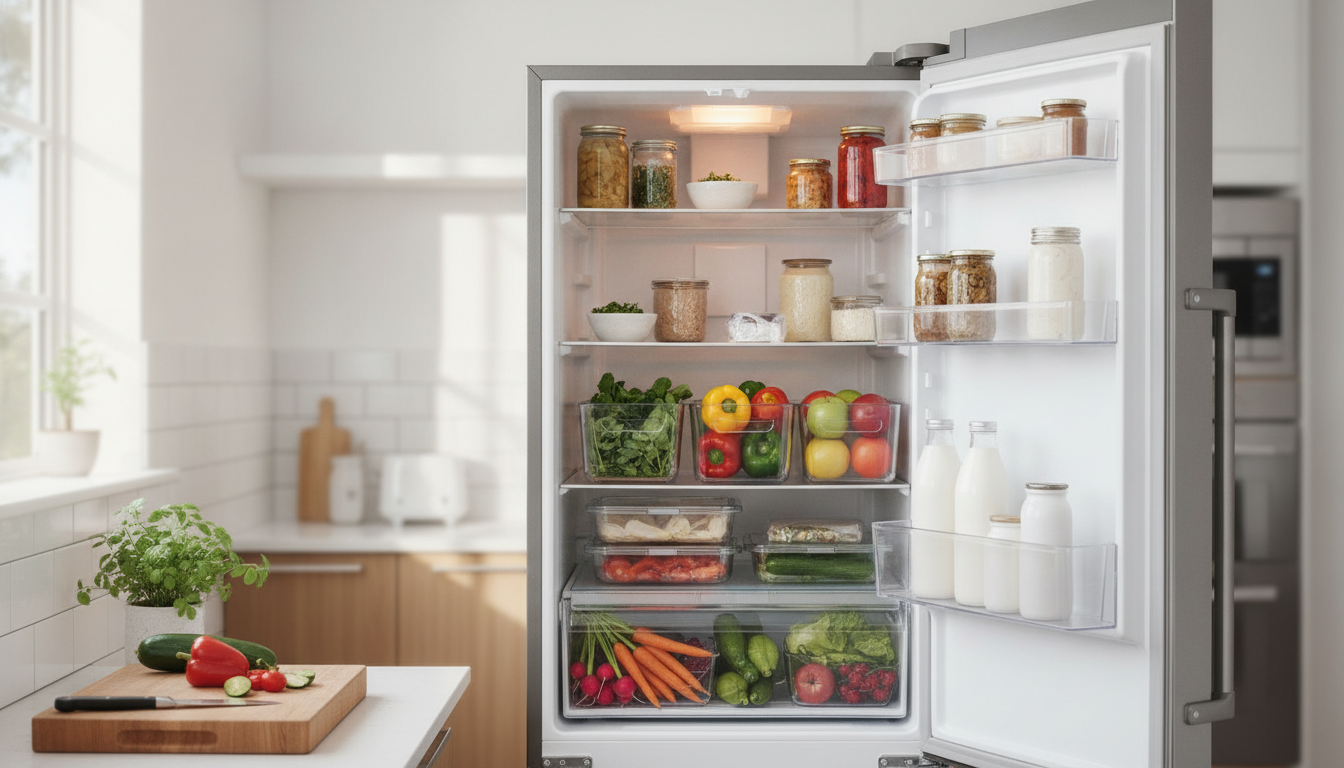
Why fridge organization reduces food waste
A fridge that “works with you” makes everyday meals easier—and it quietly cuts down on the food that gets tossed. When everything has a logical home, you spend less time digging, less money replacing duplicates, and fewer nights wondering what to cook.
- Visibility prevents duplicates: when items are easy to spot, fewer “just in case” purchases happen.
- Better rotation: a consistent system makes “use first” automatic instead of a guessing game.
- Fewer forgotten leftovers: a dedicated leftovers area turns random containers into planned meals.
- Less spoilage from bad placement: some foods fail faster when stored in the wrong zone or at inconsistent temperatures.
- A cleaner fridge supports food safety: fewer spills and expired items reduce odors and cross-contamination.
Set a baseline: clean, check temperature, and reset shelves
Before you buy bins or labels, reset what you already have. This first pass sets the foundation so your system sticks.
- Clear everything out; group items by type (dairy, condiments, produce, leftovers, drinks).
- Wipe shelves, drawers, and door bins; dry fully before restocking to prevent pooling moisture.
- Confirm fridge temperature is at or below 40°F (4°C); freezer at 0°F (-18°C). The FDA recommends using an appliance thermometer to verify, not just the dial setting.
- Toss expired items and anything with visible mold (especially soft foods).
- Remove bulky packaging when practical (outer boxes) to reclaim space and improve visibility.
For safe temperature guidance, check the U.S. FDA refrigerator and freezer recommendations and the USDA refrigeration resources.
Create fridge zones that match how the appliance works
Most refrigerators have natural “micro-zones.” Assigning each one a purpose keeps food safer and easier to find.
- Top shelf: ready-to-eat foods (leftovers, prepped meals, snacks) for quick access and consistent use.
- Middle shelf: dairy and eggs (steady temperature, easier to keep organized in bins).
- Bottom shelf: raw meat/seafood in a leak-proof tray or bin to prevent drips onto other foods.
- Crisper drawers: dedicate one for high-humidity produce (leafy greens) and one for low-humidity produce (many fruits), if adjustable.
- Door: condiments and non-critical items; avoid placing milk or eggs here if the door warms frequently.
- Keep like-with-like: bins for cheeses, deli meats, yogurt, sauces, and kid snacks reduce “lost” items.
Quick fridge map: where foods last best
| Fridge zone | Best for | Avoid storing |
|---|---|---|
| Top shelf | Leftovers, ready-to-eat foods, drinks | Raw meat or unsealed drippy items |
| Middle shelf | Dairy, eggs (in a bin), open jars | Hot foods cooling down |
| Bottom shelf | Raw meat/seafood in a lidded bin or tray | Produce you want to keep crisp (risk of drips) |
| Crisper drawers | Leafy greens (high humidity), many fruits/veg (as configured) | Wet herbs without a paper-towel wrap |
| Door | Condiments, jams, pickles, beverages | Milk/cream if temperature swings are common |
Make “use first” the default with a simple rotation system
The goal isn’t perfection—it’s a repeatable rhythm that makes older food hard to ignore.
- Add a “Use First” bin at eye level for items nearing their best-by date (opened cheese, half-used produce, deli meat).
- Restock by moving older items forward and placing new items behind (first in, first out).
- Choose one dedicated leftovers shelf; keep containers uniform if possible to stack neatly.
- Label leftovers with the date and a short name (e.g., “Chili 6/19”).
- Plan one “clear-the-fridge” meal each week using the Use First bin and leftovers shelf.
If you want a step-by-step setup you can follow once and reuse, the Fresh Starts Begin in Your Fridge | How to Organize Your Fridge to Reduce Food Waste | Digital Guide for a Cleaner, Fresher, More Sustainable Kitchen lays out zones, checklists, and simple routines that keep food visible and moving.
Store produce to last longer (without overcomplicating it)
Produce waste usually comes down to two problems: excess moisture (slime, mold) or dehydration (wilting). A few small habits go a long way.
Containers, labels, and tools that actually help
For households that rotate seasonal gear and want to free up kitchen space, having a designated non-food storage solution can help keep counters clear so fridge organization stays the priority. Consider the 2pcs Set Reusable Baby Blanket Storage Bag for storing linens or bulky extras outside the kitchen (so the fridge doesn’t become the overflow zone).
A 10-minute weekly routine to keep it from sliding back
For more waste-reduction ideas beyond the fridge, the U.S. EPA’s guidance on preventing wasted food at home is a helpful companion to a weekly routine.
Digital guide for a cleaner, fresher, more sustainable kitchen
If you want a practical system you can set up once and maintain with minimal effort, the Fresh Starts Begin in Your Fridge | How to Organize Your Fridge to Reduce Food Waste | Digital Guide for a Cleaner, Fresher, More Sustainable Kitchen is designed for real kitchens and real schedules.
FAQ
What temperature should a refrigerator be set to?
Set your refrigerator to 40°F (4°C) or below and your freezer to 0°F (-18°C). Use an appliance thermometer to confirm the actual temperature, since the built-in dial can be inaccurate.
Where should leftovers go in the fridge?
Place leftovers on the top shelf or a dedicated leftovers shelf at eye level so they’re easy to see and grab. Store them in shallow, sealed containers and label with the date so they get eaten on time.
How do you keep produce from going bad so fast?
Dry produce before storing, use humidity drawers correctly, and add a paper towel to manage moisture. Keep ethylene-producing fruits separate from sensitive greens when you can, and store small items in clear bins so they don’t get forgotten.















Leave a comment