Handheld Steam Cleaner: Quick Heat, 6 Tools for Home & Car
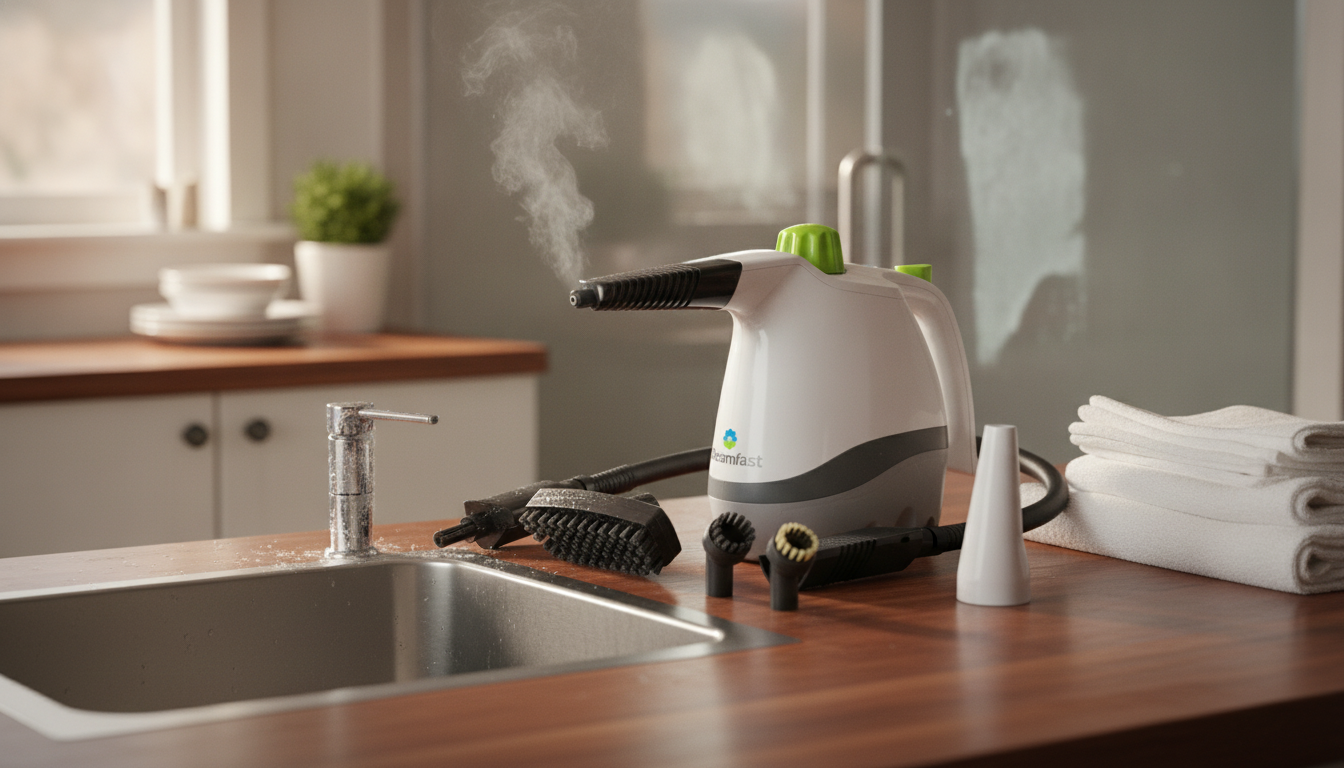
Handheld Steam Cleaner with 6 Accessories: Quick Heat-Up, Chemical-Free Cleaning for Home and Car
A compact handheld steam cleaner can cut through grime using high-temperature steam—no harsh sprays required. With quick heat-up and a set of targeted attachments, it’s built for detail cleaning on kitchen surfaces, bathroom fixtures, grout lines, upholstery, and car interiors. For households trying to reduce chemical use while still keeping up with daily messes, steam cleaning offers a practical middle ground: loosen the buildup with heat and moisture, then wipe it away.
What this handheld steam cleaner is designed to handle
A handheld unit is most useful for the places where rags and mops struggle: edges, seams, corners, and the “gunk lines” that build up around hardware. This type of steam cleaner is well-suited for:
- Everyday messes: greasy splatters, soap scum, sticky residue, and tracked-in dirt
- Tight spaces: corners, crevices, around faucets, stove knobs, and window tracks
- Soft surfaces: spot cleaning for upholstery and fabric (after testing an inconspicuous area)
- Car care: vents, cup holders, seat seams, door panels, and floor mats
- Pet-prone zones: quick refresh for areas that need chemical-free cleaning
Steam is especially helpful when residue is “stuck on” rather than just dusty—think dried spills, baked-on splatter near the cooktop, or the dull film that forms around bathroom fixtures.
Quick heat-up and chemical-free cleaning: what to expect
Steam-based cleaning works by softening and loosening grime so it can be wiped away with a cloth. A quick heat-up time supports short cleaning sessions—helpful for handling small messes as they happen instead of saving everything for a deep-clean day.
- Steam helps loosen oils, soap scum, and residue so a towel or microfiber cloth can lift it off the surface.
- Quick heat-up encourages frequent use: touch up the sink rim, hit the shower corner, or detail the stovetop edges in minutes.
- Best results come from pairing steam with light agitation (a brush attachment) and an immediate wipe-down while the area is still warm.
- Avoid using on unsealed wood, delicate finishes, or heat-sensitive plastics unless verified safe by the surface manufacturer.
Steam cleaning expectations by surface
| Surface | Typical results | Tips |
|---|---|---|
| Tile & grout | Loosens embedded grime | Use a brush attachment, then wipe while warm |
| Stovetops & range hoods | Softens grease film | Pre-wipe loose debris; finish with a microfiber cloth |
| Bathroom fixtures | Cuts soap scum buildup | Keep steam moving; dry to reduce water spots |
| Upholstery | Refreshes and lifts light stains | Test first; avoid over-wetting; blot immediately |
| Car vents & seams | Reaches tight detail areas | Use short bursts; follow with a towel |
Steam is a cleaner, not automatically a disinfectant for every situation. For guidance on cleaning versus disinfecting and when each is appropriate, review general recommendations from the CDC. If reducing exposure to certain chemical ingredients is a priority, the EPA Safer Choice program is also a useful resource when choosing any supplemental products.
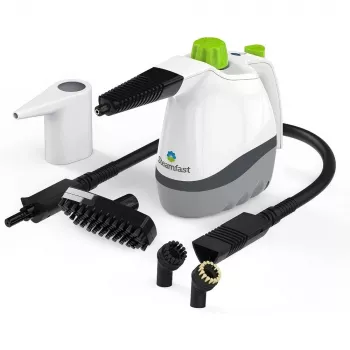
The 6 accessories and how to use them effectively
Attachments are what turn a basic handheld steamer into a detail-cleaning tool. Instead of blasting steam broadly, you can focus it into seams, change the angle for corners, or add brushing power for textured surfaces.
- Nozzle/jet: focused steam for crevices, window tracks, and grout edges
- Brush attachment(s): agitation for textured tile, sink rims, and stubborn residue
- Angled tip: helps reach around faucets, corners, and tight gaps
- Fabric/soft-surface tool (if included): for upholstery refresh and spot treatment
- Extension or precision attachments: improve reach and control for detail work
- Best practice: use short bursts, keep the tip moving, and wipe immediately to lift loosened soil
Accessory-to-task quick guide
| Accessory type | Best for | Technique |
|---|---|---|
| Jet nozzle | Cracks, tracks, grout lines | Aim into the gap, then wipe debris out |
| Round brush | Textured surfaces, soap scum | Light pressure, circular motion, finish wipe |
| Angled nozzle | Around fixtures and corners | Short bursts to avoid splatter |
| Fabric tool | Upholstery and fabric | Test first; keep moving; blot dry |
Where it fits in a cleaning routine
Safety and care tips for reliable performance
Product highlight: Handheld Steam Cleaner with 6 Accessories
If the goal is quick, targeted cleaning without relying on harsh sprays, the Handheld Steam Cleaner with 6 Accessories – Quick Heat-Up for Chemical-Free Cleaning is designed for the detail work that tends to get skipped: grout edges, fixture bases, window tracks, and car interior seams. The compact handheld format makes it easier to control in tight areas, while the included accessories help tailor the steam to the job.
At-a-glance
| Item | Details |
|---|---|
| Product | Handheld Steam Cleaner with 6 Accessories – Quick Heat-Up for Chemical-Free Cleaning |
| Price | $40.51 USD |
| Availability | In stock |
| Link | View product |
To keep small accessories and cleaning cloths organized between uses, a simple storage option like the 2pcs Set Reusable Baby Blanket Storage Bag can work well for corralling attachments in a cabinet or trunk—especially if the steamer is used for both home and car touch-ups.
FAQ
Can a handheld steam cleaner remove grease and soap scum without chemicals?
Yes—steam can soften oils and soap residue so it’s easier to lift with a cloth. For best results, use a brush attachment on stubborn buildup and wipe immediately; heavy layers may take repeated passes.
Is it safe to use steam cleaning on upholstery and car interiors?
It can be, as long as you spot-test first, use short bursts, and keep the tool moving to avoid over-wetting. Blot and dry promptly, and use extra caution on delicate materials or areas where adhesives may be heat-sensitive.
Should distilled water be used in a handheld steam cleaner?
Distilled water can reduce mineral buildup in hard-water areas and help maintain consistent steam output. Follow the manufacturer’s guidance for water type and descaling frequency to keep the unit performing reliably.












Leave a comment